Skip to content
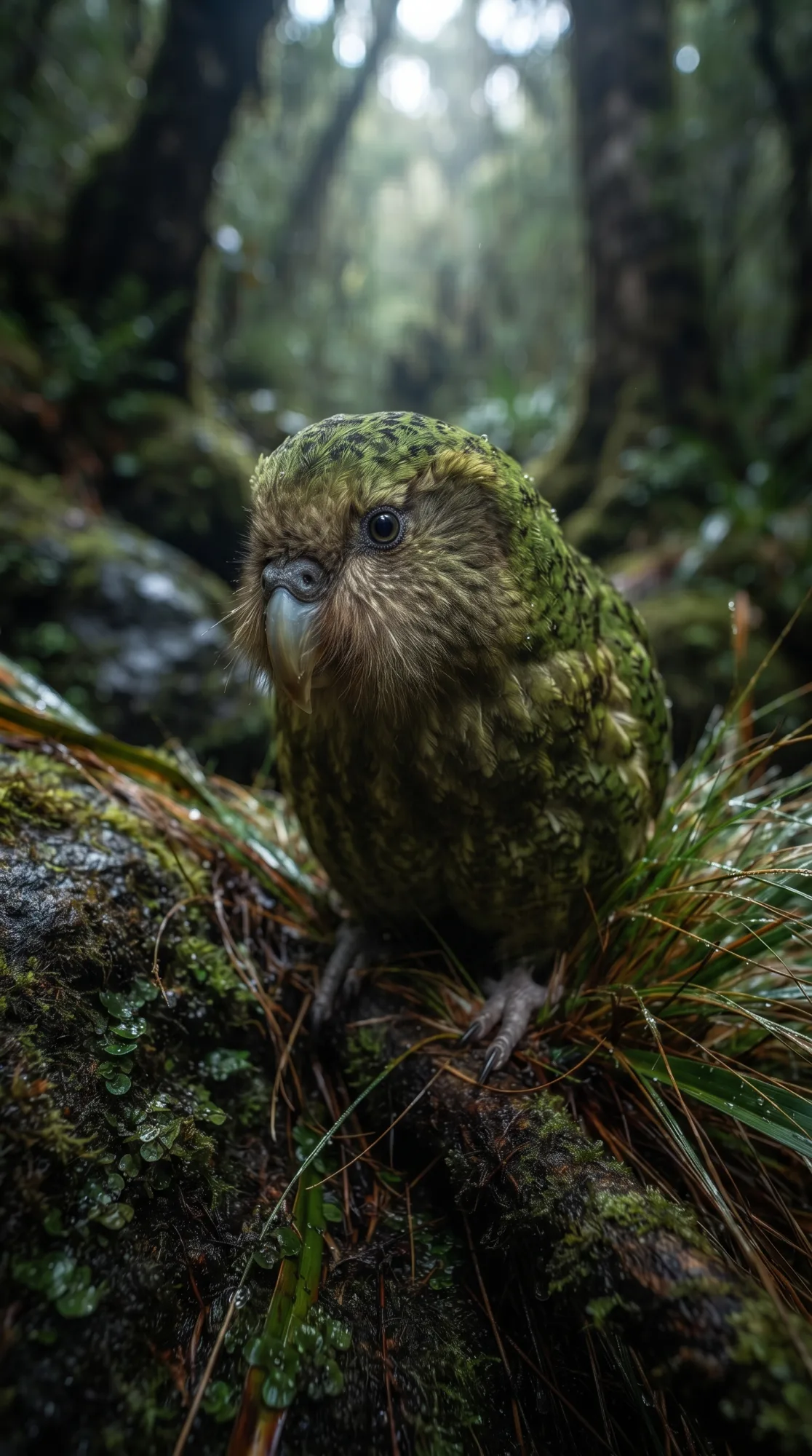
Green kakapo parrot climbing a mossy tree in a misty forest

Kakapo: Facts, Photos & Why It’s So Strange

Strigops habroptila

A fat, flightless parrot that smells like honey

It’s the heaviest parrot in the world. It can’t fly. It comes out at night, climbs trees like a small bear and smells faintly of flowers. And there are only about 325 left – each one with a name. The kakapo is the strangest bird New Zealand ever came up with.

Kakapo vs. you

Your height ft in5 ft 7 in

Quick facts

Size
23–25 in
23–25 in (58–64 cm) long
Weight
4.4–8.8 lb
4.4–8.8 lb (2–4 kg)
Lifespan
~90 years
Possibly up to 90 years
Left in the wild
325
325 (September 2026) – every single one has a name

Conservation status

  1. Least Concern
  2. Near Threatened
  3. Vulnerable
  4. Endangered
  5. Critically Endangered (this animal)
  6. Extinct in the Wild
  7. Extinct

Critically Endangered

Superpowers

  • Venomous : Is it venomous? No
  • Glows : Does it glow? No
  • Regenerates limbs : Can it regenerate limbs? No

Identity

Scientific name
Strigops habroptila
Class
Bird (parrot)
First described
1845, by George Robert Gray

Life & family

Diet
Leaves, seeds, fruit, roots and bark
Gestation
None – the eggs hatch after about 30 days
Offspring
1–4 eggs, only in good years
Predators
Stoats, cats and rats brought by people

Where to find it

Habitat
Forest and scrub on predator-free islands
Lives in
New Zealand
In the wild
No – they live on protected islands closed to visitors
In zoos
No

Explore similar

Why is this animal unusual?

It’s the only parrot in the world that can’t fly, the only one that’s active at night and the only one with this style of dating. Also the heaviest.

Why does it look like that?

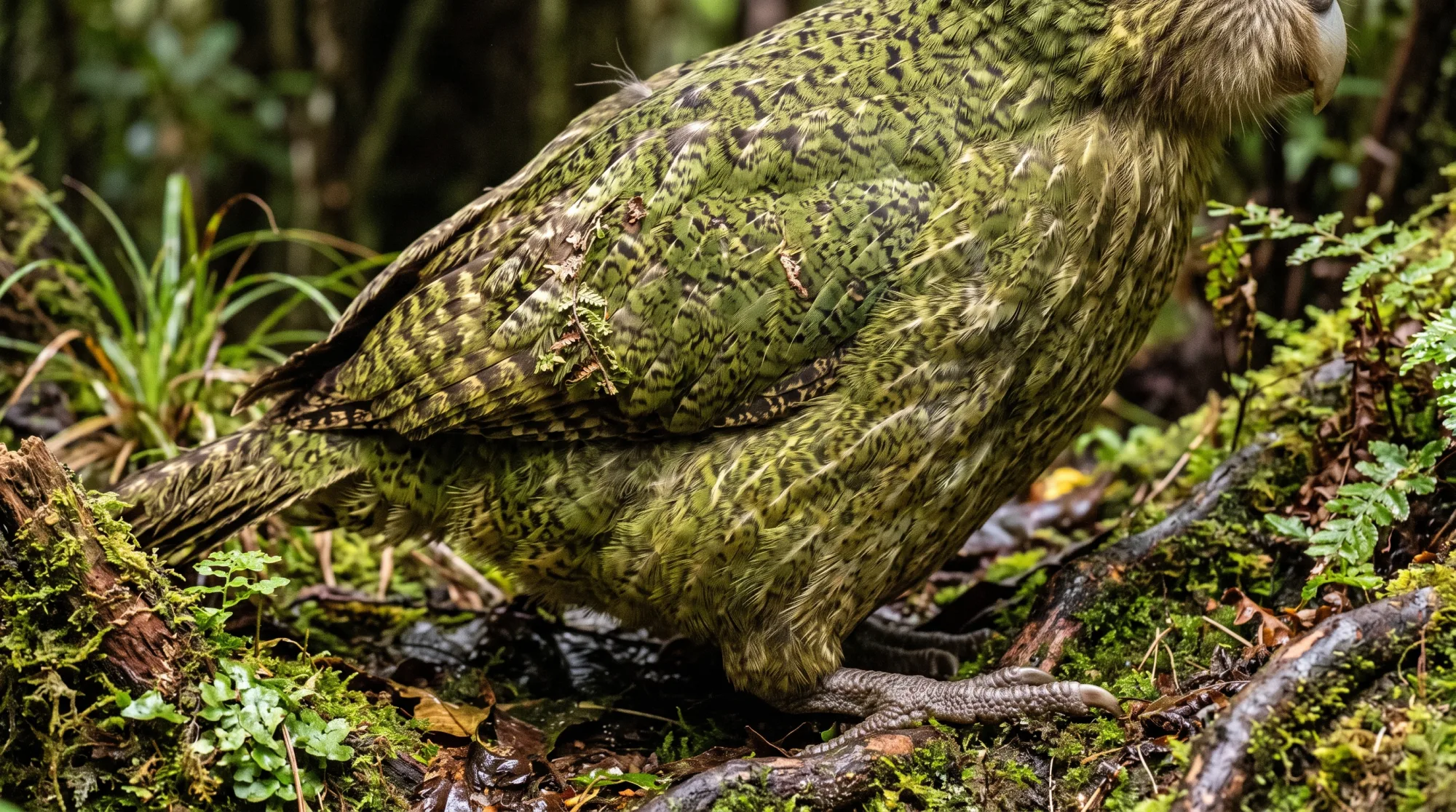
Moss-green feathers for camouflage, a round owl-like face with whiskers, and short wings it uses only for balance and for parachuting clumsily out of trees.

Strangest biological feature

The boom. In breeding season a male digs a bowl in the ground, puffs himself up like a balloon and makes a deep “boom” that can travel for kilometres. He may do this every night for months.

Why is it strange?

Kakapo only breed when a native tree called rimu produces a bumper crop of fruit – which happens every two to four years.

Interesting behavioral facts

When it senses danger it freezes and relies on camouflage. That worked against eagles. It didn’t work against cats and stoats, which hunt by smell.

Records held

The heaviest parrot on Earth, and possibly one of the longest-lived birds. One kakapo, Sirocco, became New Zealand’s official “spokesbird” after trying to mate with a zoologist’s head on television.

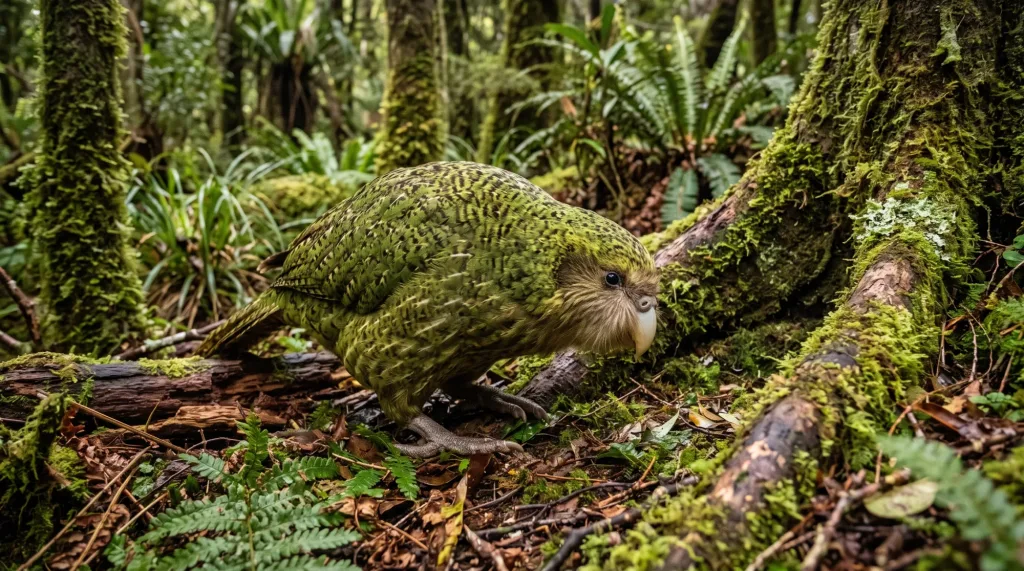
Mossy-green kakapo parrot sitting on the forest floor among ferns

Kakapo: quick answers

How many kakapo are left?

325, according to New Zealand’s Department of Conservation in September 2026, after a record breeding season with 90 new chicks. It’s still critically endangered.

Why can’t the kakapo fly?

It evolved in New Zealand, where there were no land mammals hunting it, so flying wasn’t needed. Over time it became heavy, with short wings used only for balance and parachuting down from trees.

Can you see a kakapo?

Not in the wild – they live on predator-free islands closed to the public. Very occasionally a kakapo such as Sirocco has visited mainland sanctuaries for special events.

Why does the kakapo smell?

Its feathers have a sweet, musty smell often compared to honey or flowers. Unfortunately, it also helps predators like stoats find it.

What does a kakapo eat?

Only plants: leaves, roots, seeds, bark, pollen and fruit. It especially loves the fruit of the rimu tree, and kakapo breed mainly in years when rimu trees fruit heavily.

Who is Sirocco the kakapo?

A male kakapo who became world-famous in 2009, when he tried to mate with a zoologist’s head on camera. He was later named New Zealand’s official “Spokesbird for Conservation”.

Know someone who needs to see this?

Send them the Kakapo. They'll thank you. Probably.