Skip to content
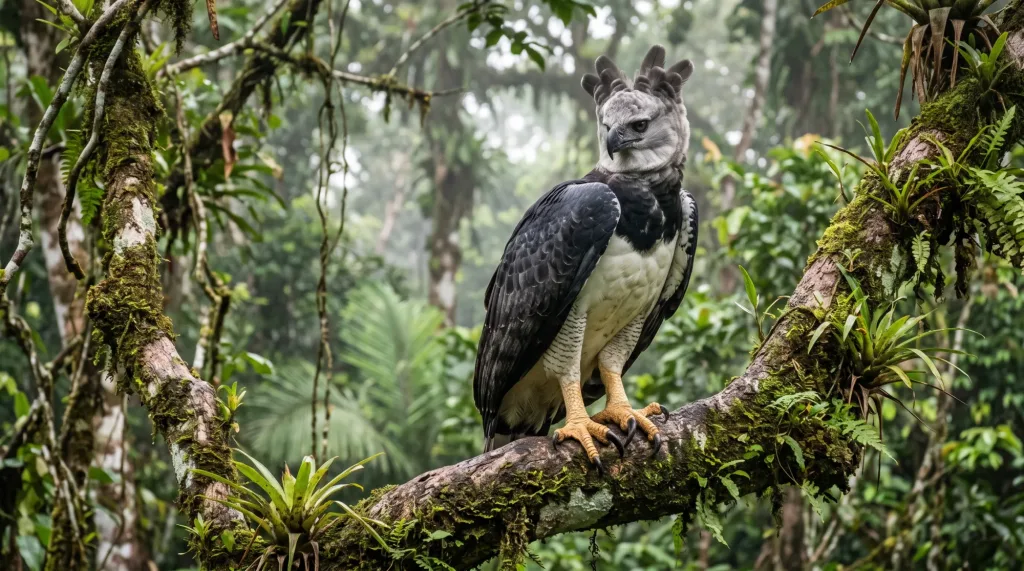
Harpy eagle perched on a branch in a misty rainforest

Harpy Eagle: Facts, Photos & Why It’s So Strange

Harpia harpyja

Talons the size of bear claws

It has claws as long as a grizzly bear’s, legs as thick as a child’s wrist and a stare that makes people uncomfortable. The harpy eagle is the most powerful bird of prey in the Americas – it plucks sloths and monkeys straight out of the treetops.

Harpy Eagle vs. you

Your height ft in5 ft 7 in

Quick facts

Size
~3.3 ft
About 3.3 ft (1 m) tall, with a wingspan of up to 7 ft 3 in (2.2 m)
Weight
13–20 lb
Females 13–20 lb (6–9 kg); males about half that
Lifespan
25–35 years
Left in the wild
Unknown
Unknown – and declining

Conservation status

  1. Least Concern
  2. Near Threatened
  3. Vulnerable (this animal)
  4. Endangered
  5. Critically Endangered
  6. Extinct in the Wild
  7. Extinct

Vulnerable

Superpowers

  • Venomous : Is it venomous? No
  • Glows : Does it glow? No
  • Regenerates limbs : Can it regenerate limbs? No

Identity

Scientific name
Harpia harpyja
Class
Bird (bird of prey)
First described
1758, by Carl Linnaeus

Life & family

Diet
Sloths and monkeys, plus opossums, iguanas and large birds
Gestation
None – the eggs hatch after about 8 weeks
Offspring
Two eggs, but only one chick is raised, every 2–3 years
Predators
None

Where to find it

Habitat
Lowland tropical rainforest
Lives in
Central and South America, mostly the Amazon
In the wild
Hard – with a guide in Brazil, Panama or Guyana
In zoos
Yes – a few zoos keep them

Explore similar

Why is this animal unusual?

Its back talons can reach 4.7 in (12 cm) – about the same as a brown bear’s claws. It can carry off prey weighing about as much as itself.

Why does it look like that?

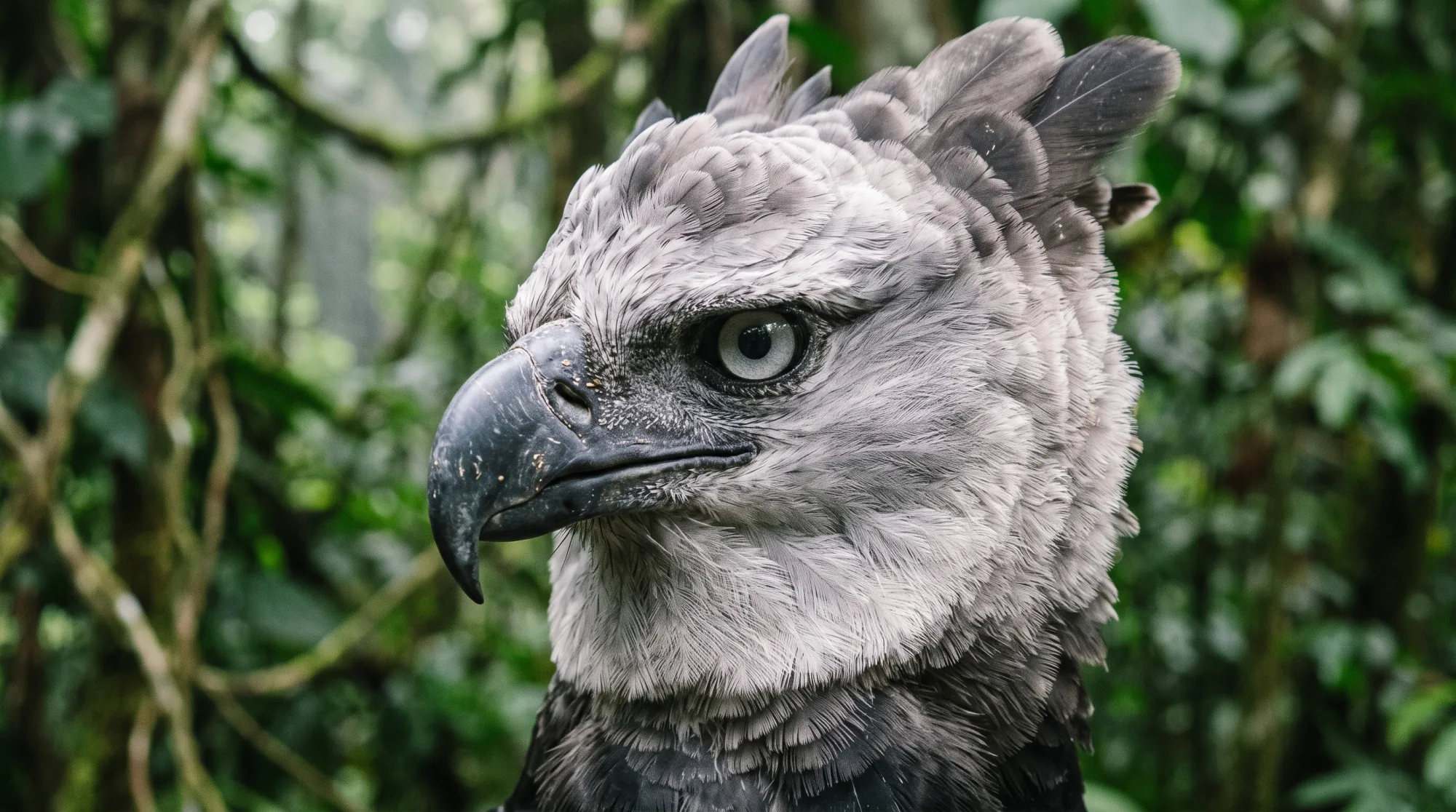
A double crest of feathers that it raises when alert, and a face framed by a ring of feathers that funnels sound to its ears, like an owl’s.

Strangest biological feature

The grip. Its feet are strong enough to crush the bones of its prey instantly.

Why is it strange?

Its wings are surprisingly short for such a big eagle. That’s on purpose: short, broad wings let it weave between trees at up to 80 km/h.

Interesting behavioral facts

Pairs stay together for life and build huge nests in the tallest trees of the forest. A chick depends on its parents for up to two years.

Records held

The national bird of Panama, and one of the heaviest eagles in the world.
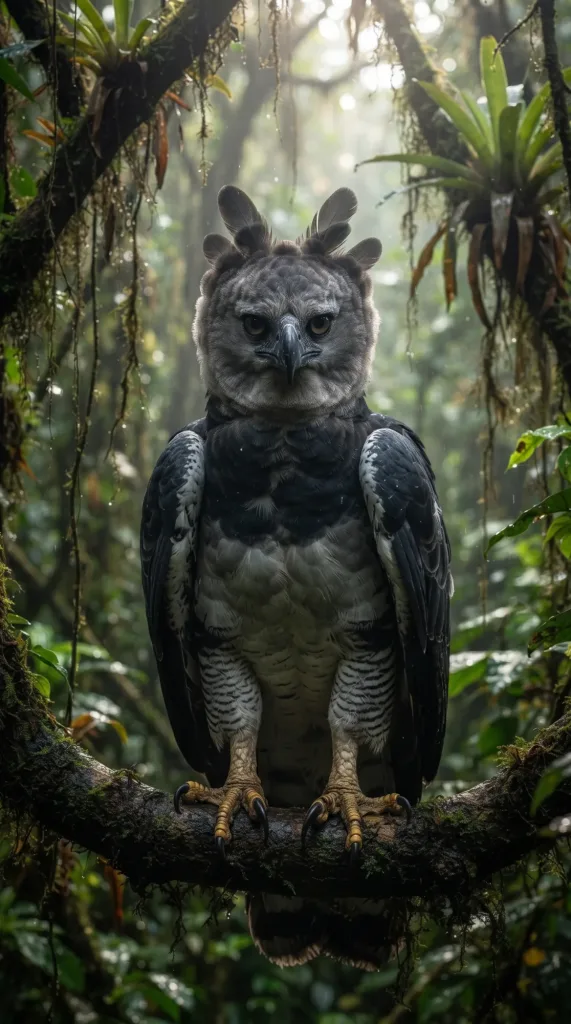
Harpy eagle with grey feathers and a crest perched on a rainforest branch

Harpy Eagle: quick answers

Is the harpy eagle dangerous to humans?

It doesn’t hunt people, but its talons are as long as a bear’s claws, and a parent will defend its nest. Researchers who climb to nests take protective precautions.

Why is it called a harpy eagle?

It’s named after the harpies of Greek mythology – fierce creatures that were part woman, part bird.

Is the harpy eagle the biggest eagle in the world?

It’s one of the heaviest and most powerful. The Philippine eagle is slightly longer and Steller’s sea eagle can be heavier, so the title depends on how you measure.

Why is the harpy eagle declining?

Mainly because its rainforest is being cut down, and some are shot. Each pair needs a large territory with very tall trees and raises only one chick every two to three years.

Where do harpy eagles live?

In lowland rainforests from southern Mexico to northern Argentina. Their stronghold is the Amazon; they have disappeared from much of Central America.

What does a harpy eagle eat?

Mainly sloths and monkeys, snatched from the treetops. It also takes porcupines, opossums, coatis and big birds such as macaws.

Know someone who needs to see this?

Send them the Harpy Eagle. They'll thank you. Probably.