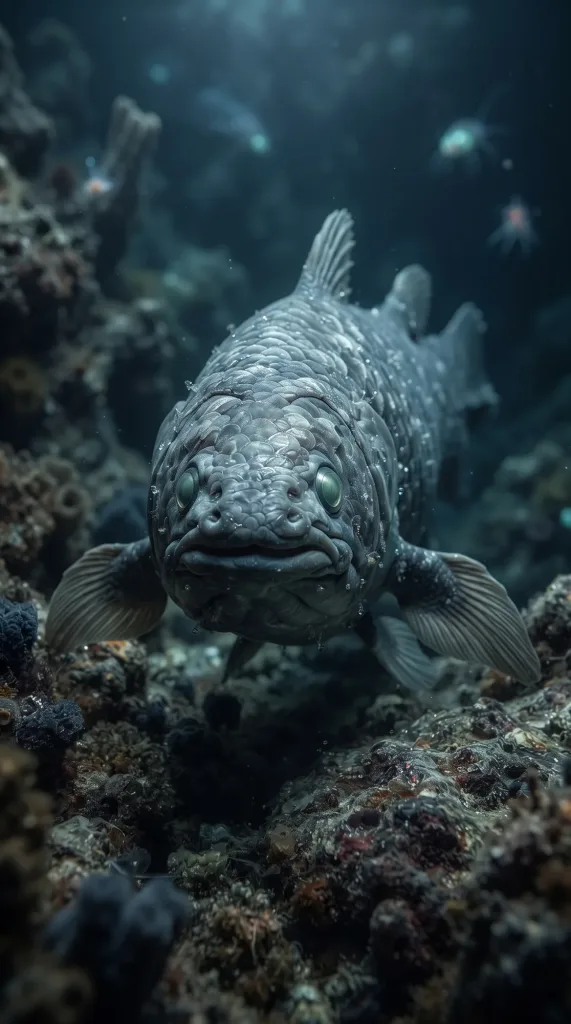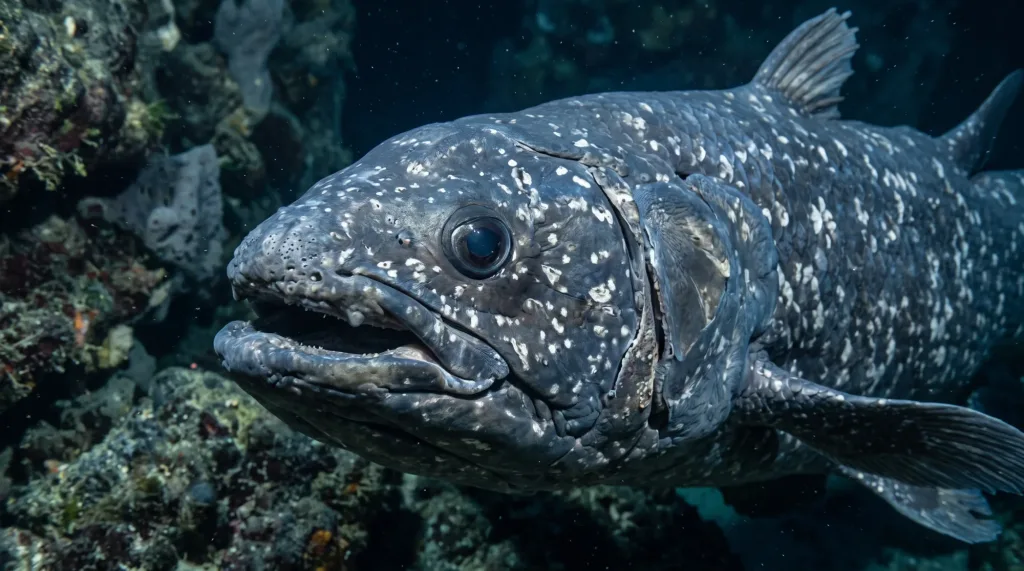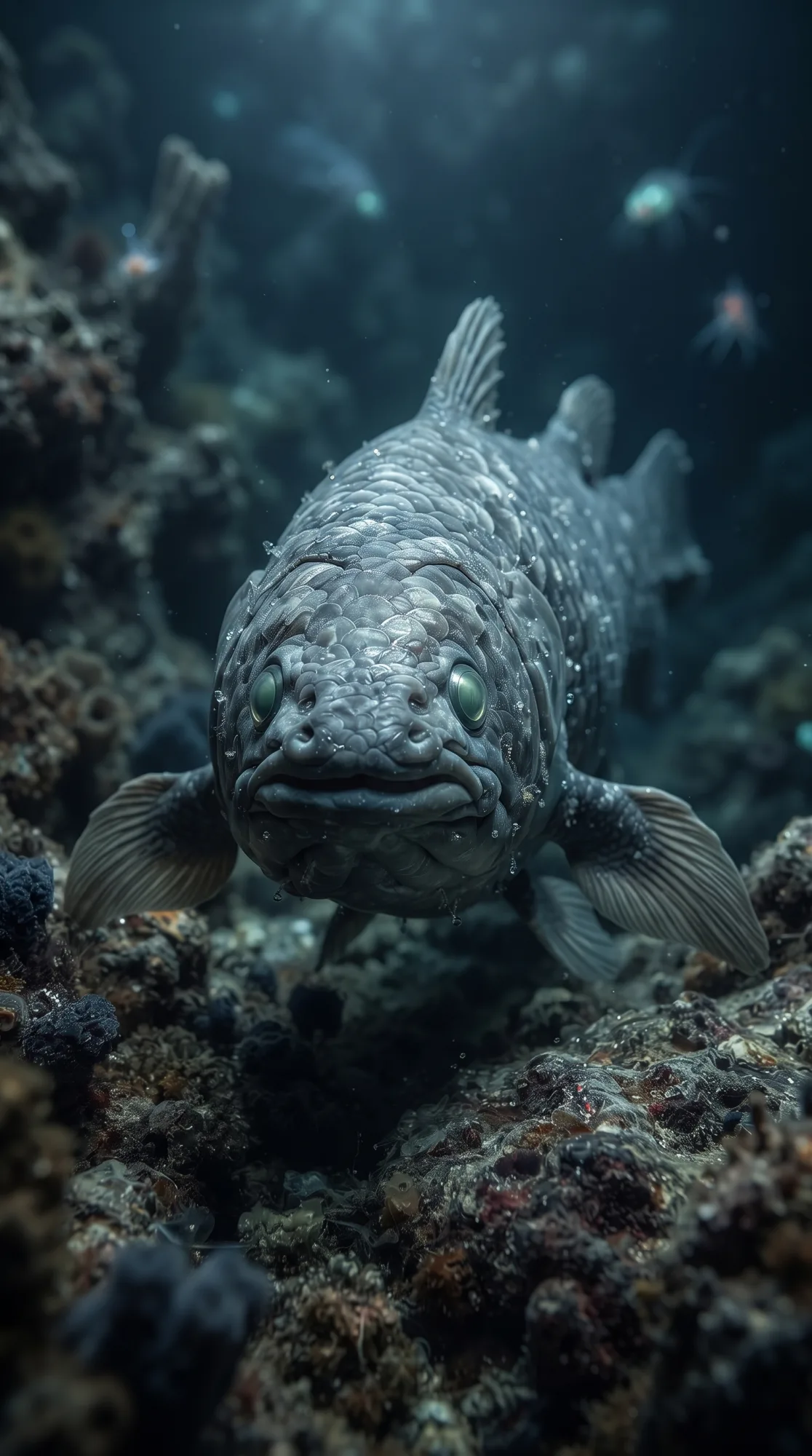
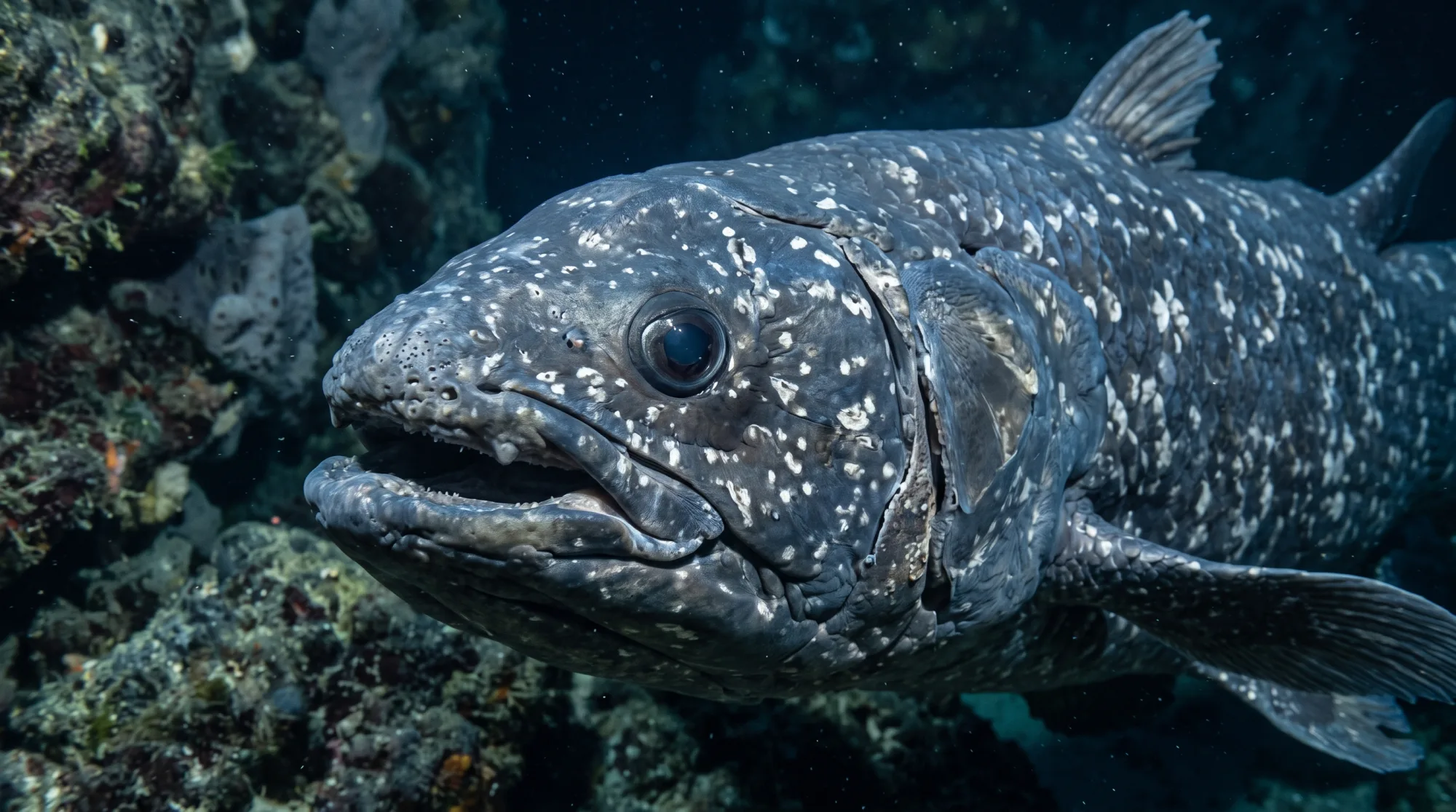
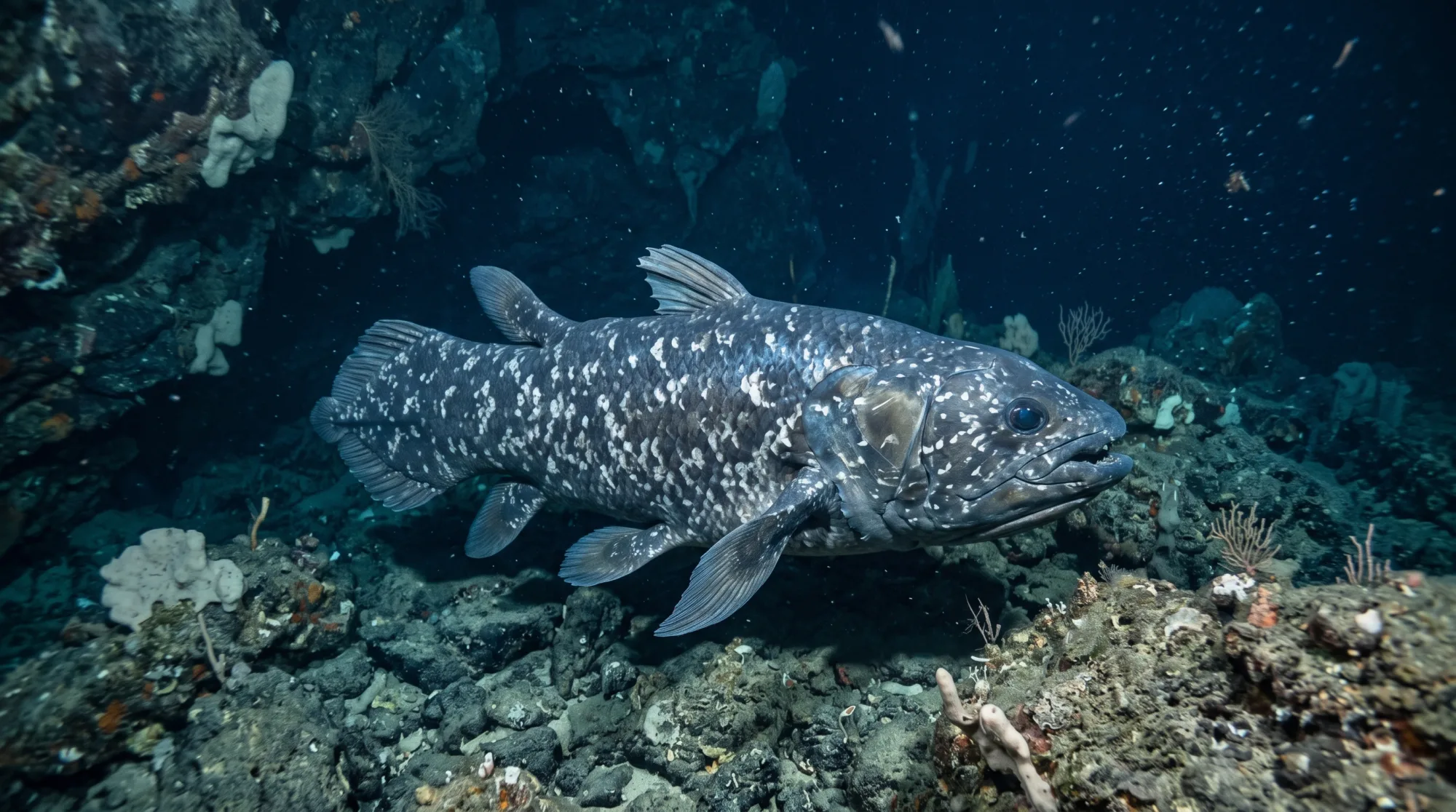
Why is this animal unusual?
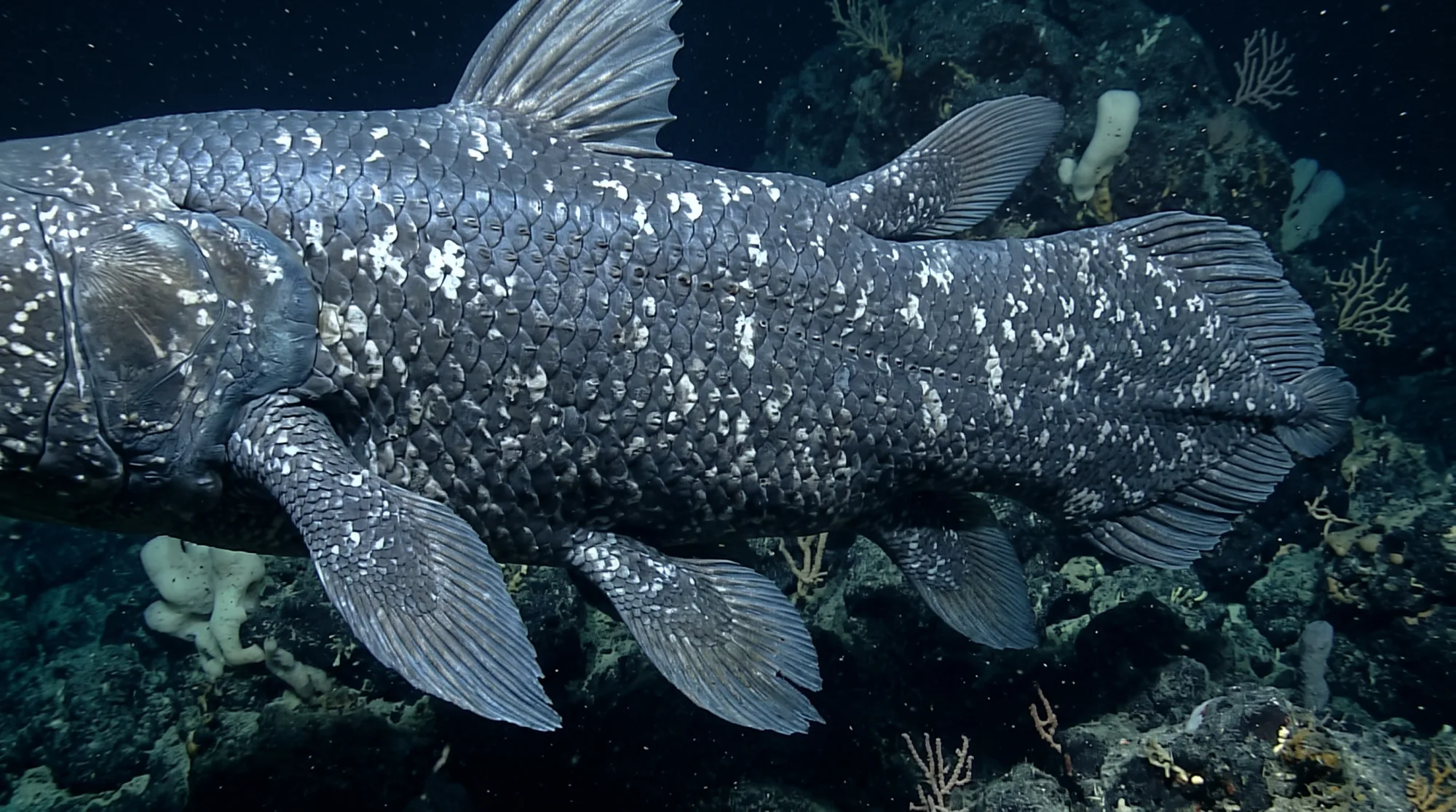
Its fins sit on fleshy, bony stalks that look like stubby legs – and it moves them in an alternating pattern, like a trotting horse. The coelacanth is more closely related to you than it is to a tuna.
Why does it look like that?
Thick, armour-like scales, deep blue with white flecks. The fleck pattern is unique to each fish, so researchers use it like a fingerprint.
Strangest biological feature
A hinge in its skull. The front of the head swings upward so the mouth can open extra wide. It also has a jelly-filled organ in its snout that probably senses the electricity of nearby prey.
Why is it strange?
It likes to drift head-down, doing slow headstands near the seabed. And its tiny brain fills only about 1.5% of its skull – the rest is fat.
Interesting behavioral facts
Coelacanths spend the day packed together in caves and drift out at night to hunt, barely moving a fin. Their oily flesh tastes so bad that local fishermen considered them worthless.
Records held
A second species was discovered in 1997 – in an Indonesian fish market, by a biologist on his honeymoon.