Deep dive 3 min read
Is the Narwhal Real? The Truth About the Unicorn of the Sea
A whale with a three-metre spiral horn sounds like a fairy tale. It isn't. Meet the narwhal, the real unicorn of the sea, and find out what that "horn" really is.
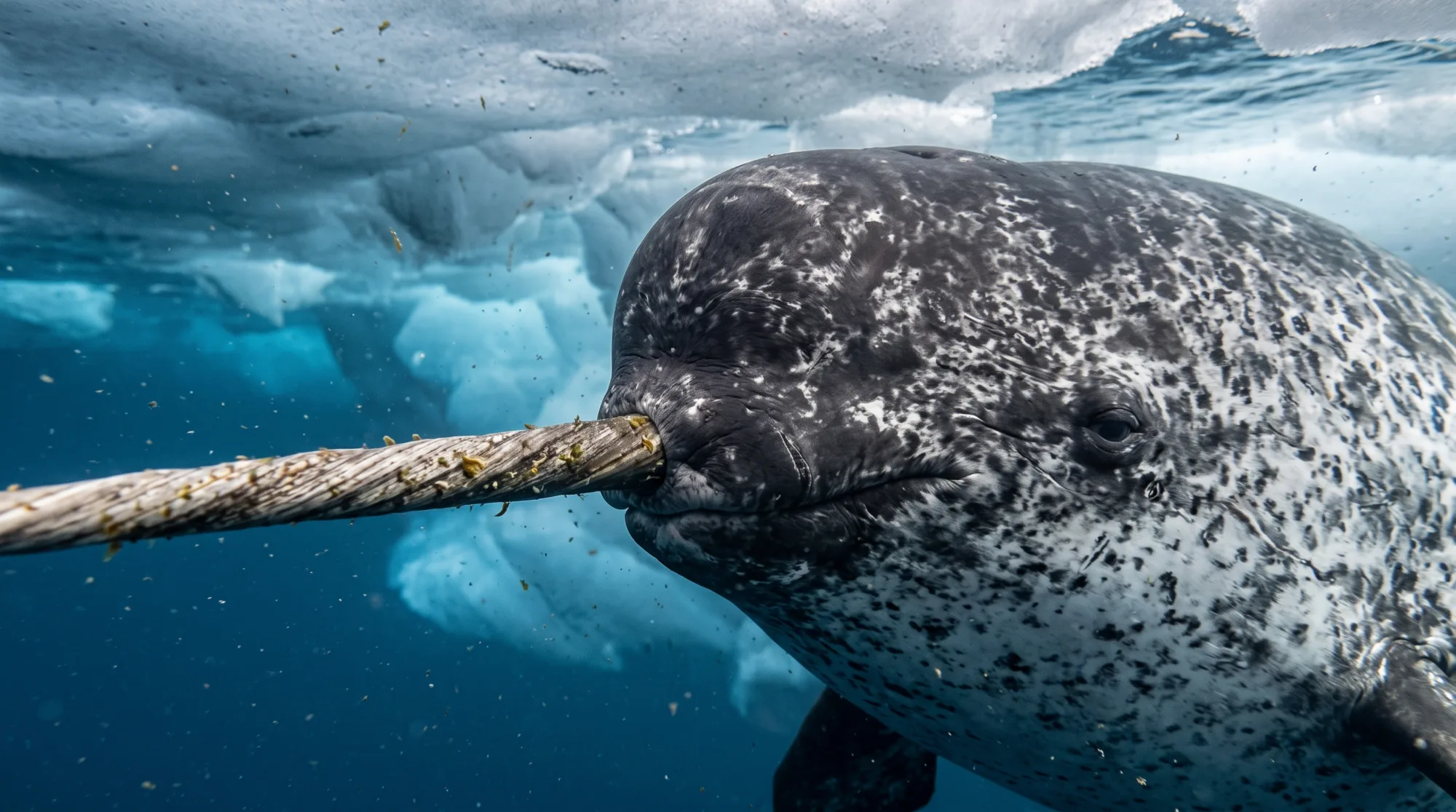
A pale whale gliding under Arctic ice with a long, spiral horn sticking out of its head. It sounds like something from a children’s book, and plenty of people genuinely think the narwhal is made up. It isn’t. The narwhal is very real, and the truth about its “horn” is even stranger than the legend.
Yes, the narwhal is real
Narwhals are medium-sized toothed whales that live in the Arctic waters around Canada, Greenland, Norway and Russia. Adults are about 4 to 5.5 metres long, not counting the tusk. They travel in groups, dive more than a kilometre deep to hunt fish and squid, and spend much of the winter under thick sea ice, breathing through cracks.
The horn is actually a tooth
That famous unicorn horn isn’t a horn at all. It’s a tooth: usually the left canine, which grows straight out through the upper lip in a long, left-handed spiral. It can reach about 3 metres. Most males have one, while only some females grow a tusk.
And it’s not a dead, bony spike. The tusk is packed with nerve endings that connect to the narwhal’s brain. Scientists think it can sense changes in the water around it, like temperature or saltiness, which makes it less of a sword and more of a giant antenna.
Strange but trueAbout one in 500 male narwhals grows two tusks. A narwhal with a double tusk is the rarest unicorn of all.
What do narwhals use it for?
Probably a bit of everything. Males show off their tusks to females and to rivals, sometimes crossing and rubbing them together above the water. Drone footage has also caught narwhals tapping fish with their tusks to stun them before eating. It’s a status symbol, a sensor and, occasionally, a fishing tool.
The unicorn of the sea doesn’t have a horn. It has a three-metre tooth with feelings.
How the narwhal became a unicorn
In medieval Europe, unicorn horns were treasure. People believed they could neutralise poison, and they sold for many times their weight in gold. What almost nobody knew was that these “horns” were narwhal tusks, brought south by Viking and Arctic traders who kept their source a secret.
The Danish royal family even had a throne built from narwhal tusks, displayed as proof of the king’s unicorn-like power. It took centuries before scientists connected the magical horns to a whale swimming in the Arctic.
What about pink narwhals?
Sorry: pink narwhals don’t exist. Real narwhals are born bluish-grey, turn spotty as they grow and become paler, almost white, with age. The pink, sparkly narwhals in cartoons and toys are pure fantasy. The good news is that the real thing is doing fine: there are well over 100,000 narwhals, although melting Arctic ice is a growing threat. For more animals that look made up, browse our Real or Fake? collection.
Tell a friend