
Why is this animal unusual?
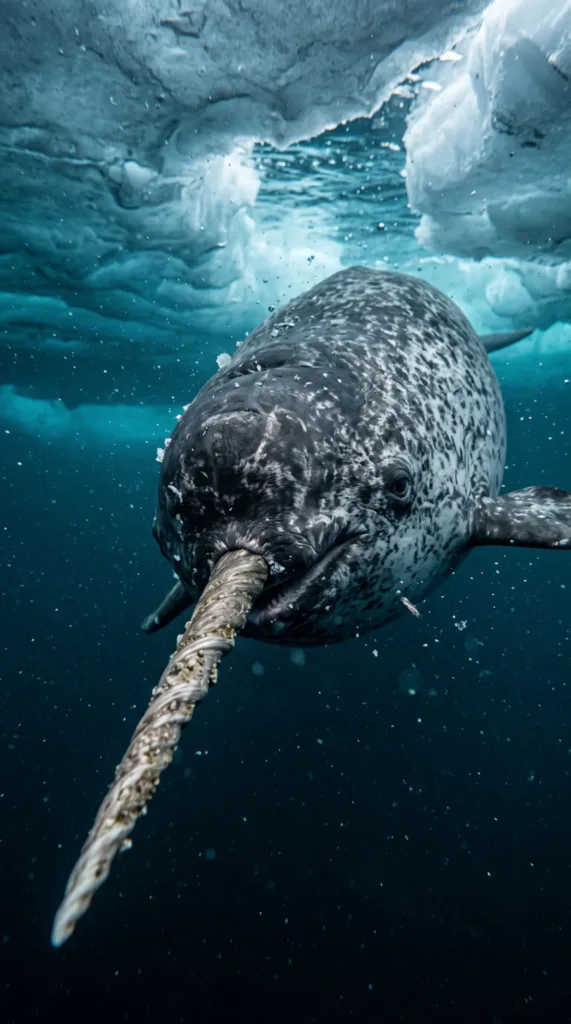
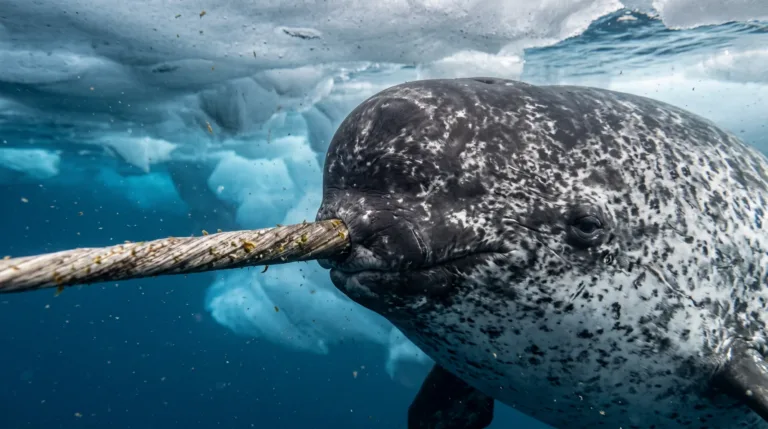
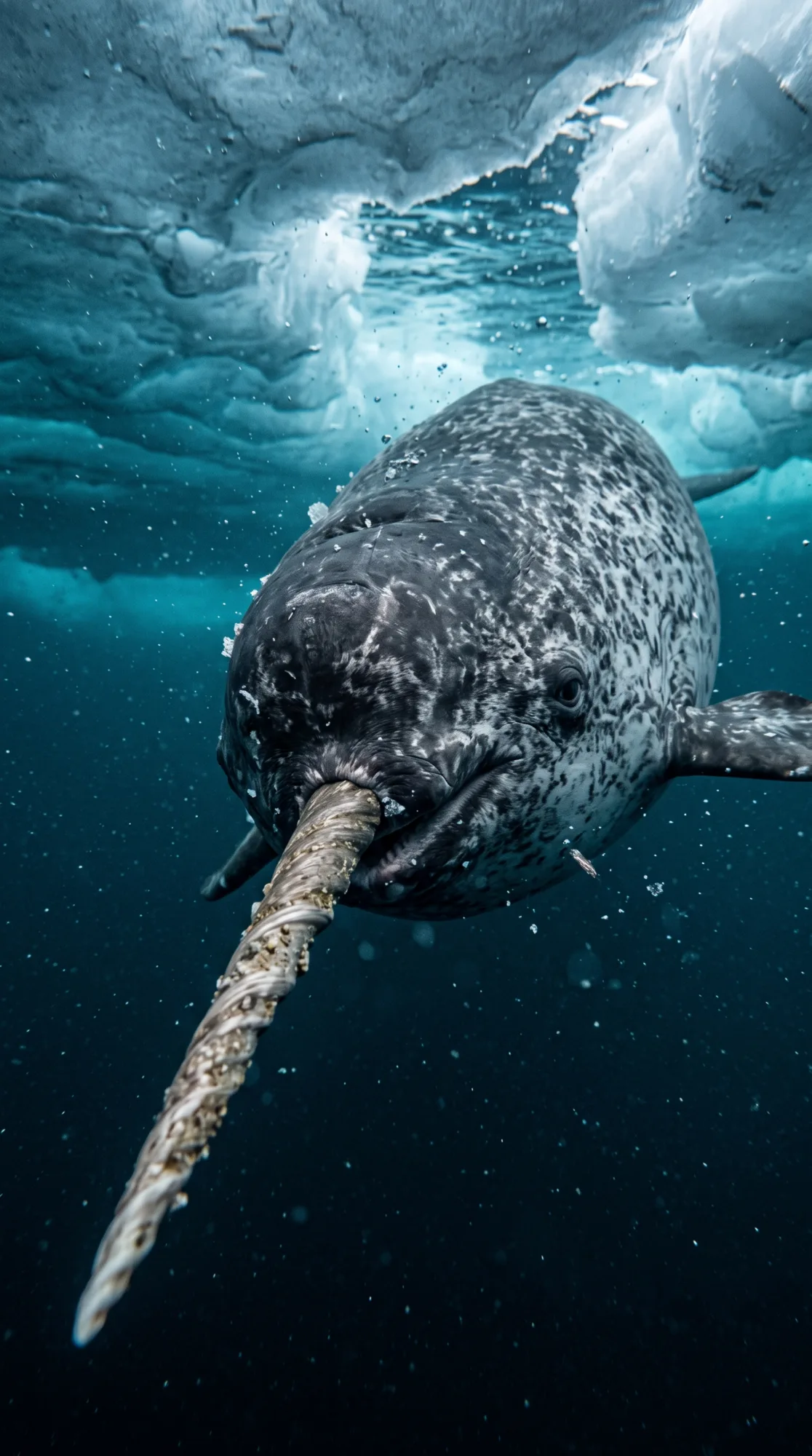
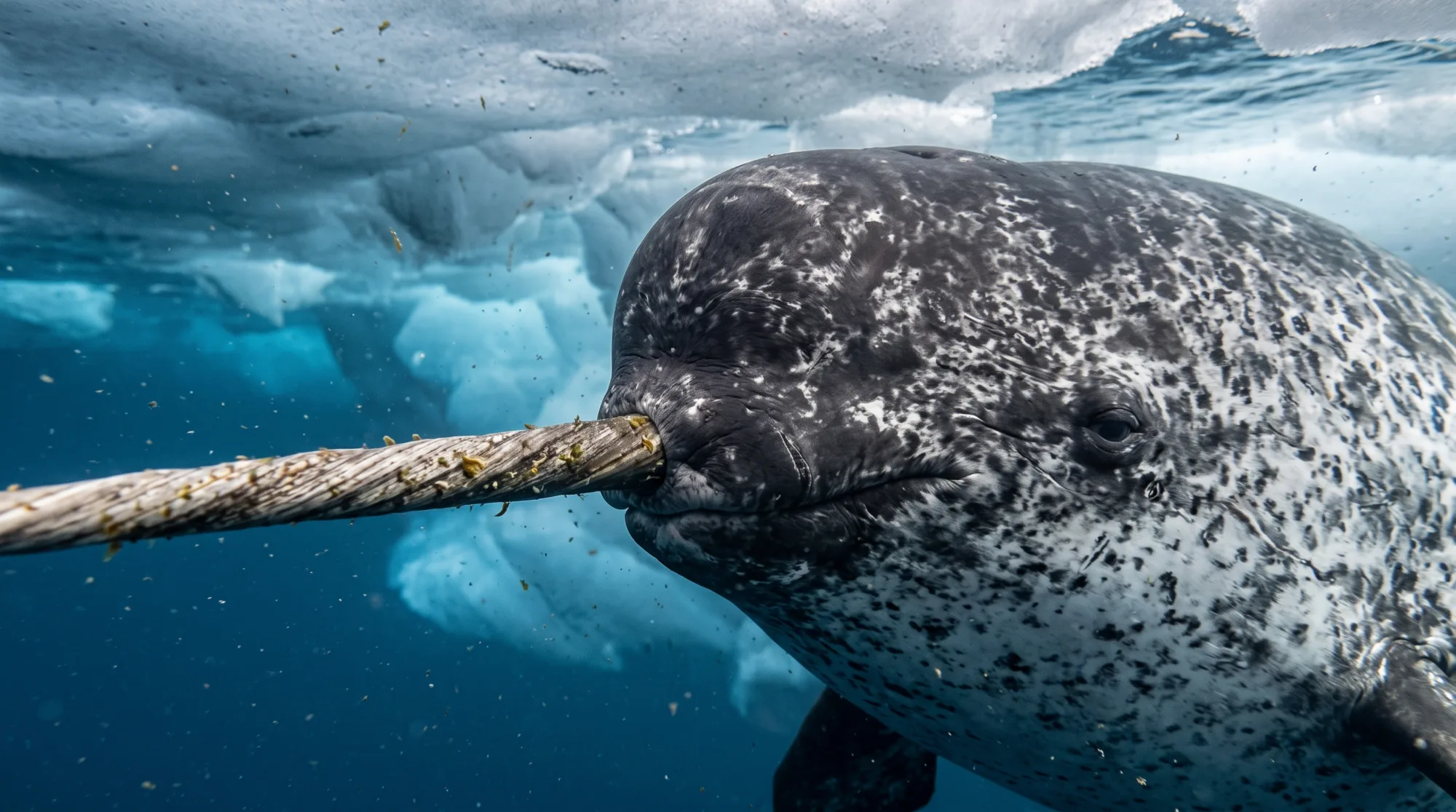
The tusk is a canine tooth – almost always the left one – that grows out through the upper lip in a spiral. It always twists the same way.
Why does it look like that?
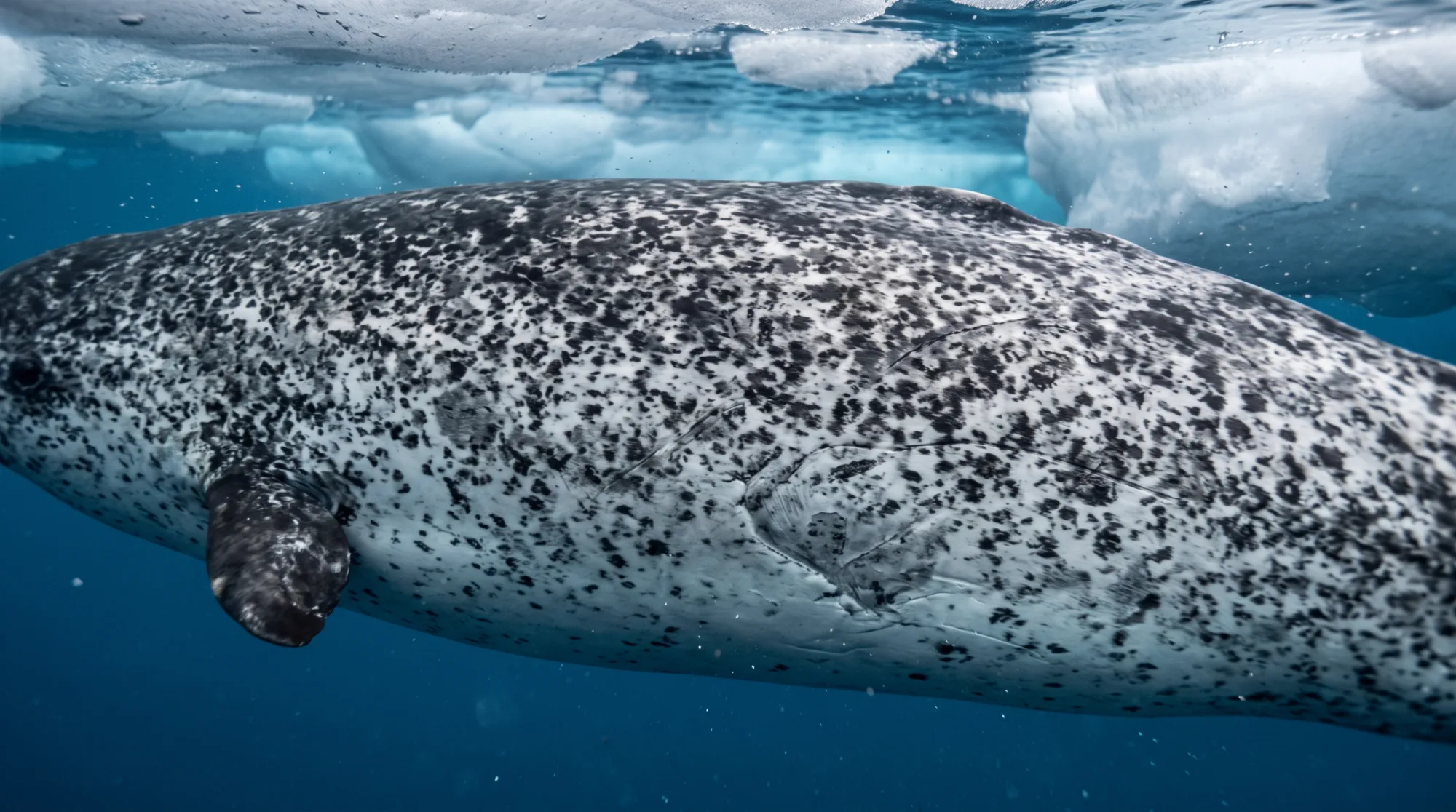
Narwhals are born dark and get paler and more speckled with age; very old ones are nearly white. They have no fin on their backs, which makes it easier to swim under sea ice.
Strangest biological feature
The tusk is full of nerves – millions of them – so it probably works as a sensor for things like temperature and saltiness of the water. Drone footage has also shown narwhals tapping fish with it to stun them.
Why is it strange?
Apart from the tusk, a narwhal has no working teeth in its mouth. It simply sucks its prey in and swallows it whole. Most females have no tusk, and a rare male grows two.
Interesting behavioral facts
Narwhals are among the deepest-diving whales. They regularly plunge more than a kilometre down in search of fish and can stay under for about 25 minutes.
Records held
In medieval Europe, narwhal tusks were sold as unicorn horns and were worth many times their weight in gold. Queen Elizabeth I was reportedly given one valued at the price of a castle.