Deep dive 3 min read
See-Through Frogs: Is the Glass Frog Really Transparent?
Flip a glass frog over and you can watch its heart beat. Here's how much of this tiny rainforest frog is really see-through, and its amazing sleeping trick.
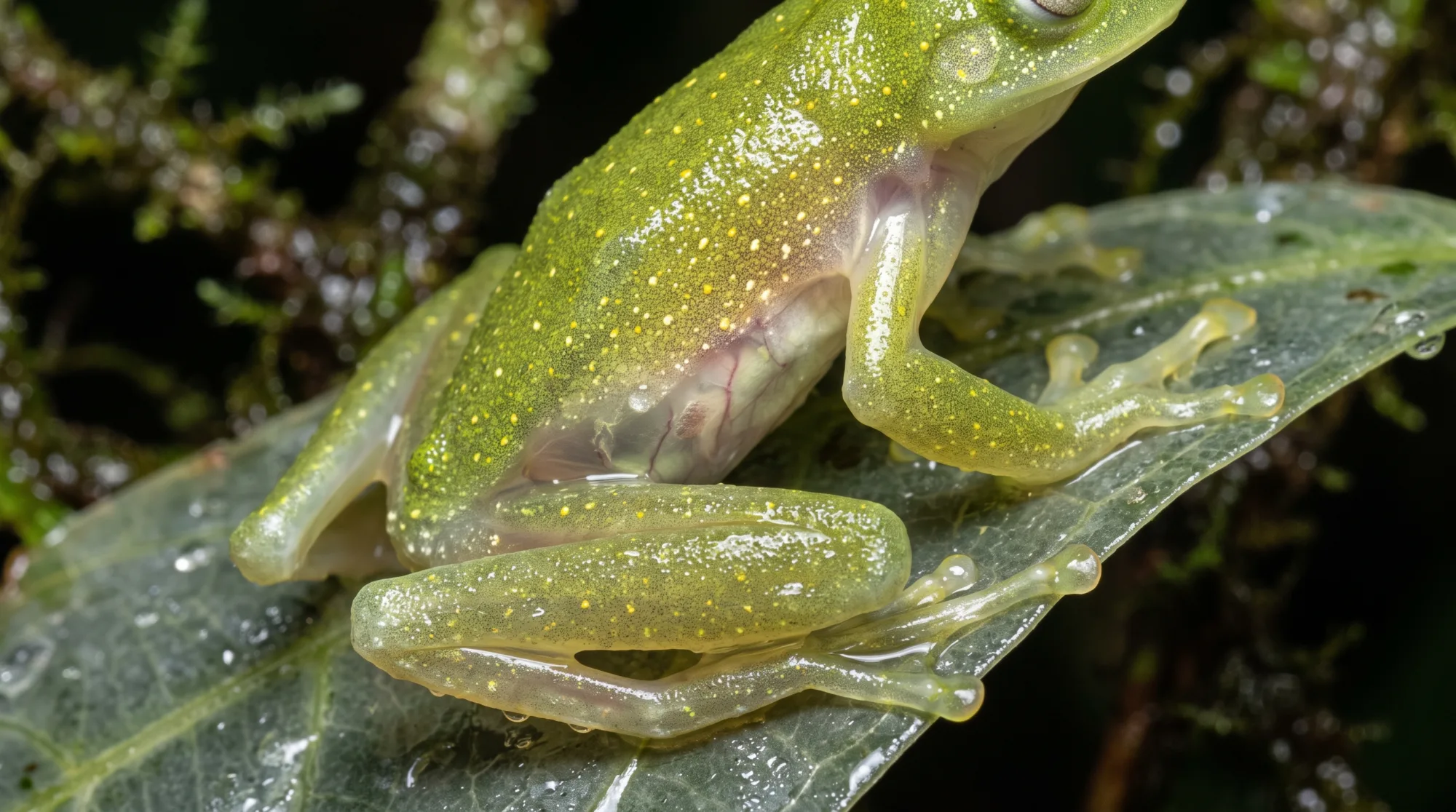
Some animals hide behind leaves. The glass frog hides by being half invisible. Look at one from below and you’ll see its heart pumping, its gut coiled up and sometimes even a bunch of eggs inside a female. But is a glass frog really transparent, or is that just good photography? Let’s take a closer look.
What is a glass frog?
Glass frogs are a family of small tree frogs, with around 150 species living in the rainforests of Central and South America. Most are only 2 to 3 cm long, about the size of a grape. They spend their lives on leaves above fast-flowing streams, mostly active at night.
How see-through are they?
Partly. From above, most glass frogs are lime green, sometimes with little dots, which helps them blend in with the leaves. The magic happens underneath: the skin on their belly is so clear that you can see the organs inside. The heart, liver, intestines and bones are all on display, like a living anatomy model.
From above, a green frog. From below, a live anatomy lesson.
Why be transparent?
It’s camouflage. A glass frog resting on a leaf lets light pass through the edges of its body, so its outline blurs into the green below. A predator looking for a frog-shaped blob sees only a vague shadow. Being partly see-through makes it surprisingly hard to spot.
The sleeping trick
Blood is the biggest problem for any transparent animal. Red blood cells are, well, red, and they show up clearly. In 2022, scientists discovered how glass frogs deal with it. When they fall asleep, they pull almost all of their red blood cells out of circulation and pack them into their liver, which is covered by a mirror-like layer.
This makes a sleeping glass frog two to three times more transparent than an awake one. When it wakes up, the blood flows back out. Even more amazing: storing that much blood in one place would cause dangerous clots in humans, but the frogs do it every day without any problem.
Strange but trueIn many glass frog species, the dads do the babysitting. Males guard the eggs on leaves for days or even weeks, keeping them moist and fighting off hungry insects.
Do glass frogs glow?
You may have seen photos of “glowing glass frogs” online. Many amphibians do shine faintly under UV or blue light, which is called fluorescence, but that’s a special lighting effect, not a glow you’d notice in the rainforest. Plenty of those glowing images are edited, too.
The verdict
Is the glass frog really transparent? Not completely, but its belly truly is a window into its body, and its blood-hiding trick makes it one of nature’s most impressive vanishing acts. See more see-through creatures in our See-Through collection.
Tell a friend